Clean Water
Seven systems running. One new initiative a month.
We install RO drinking-water systems for government schools and communities drinking tap, direct-supply, or underground water without treatment. Seven units are already running across Haryana; our focus for the year ahead is Gurugram and nearby villages, favouring collaboration and asset-light delivery over heavy upfront capital wherever we can.
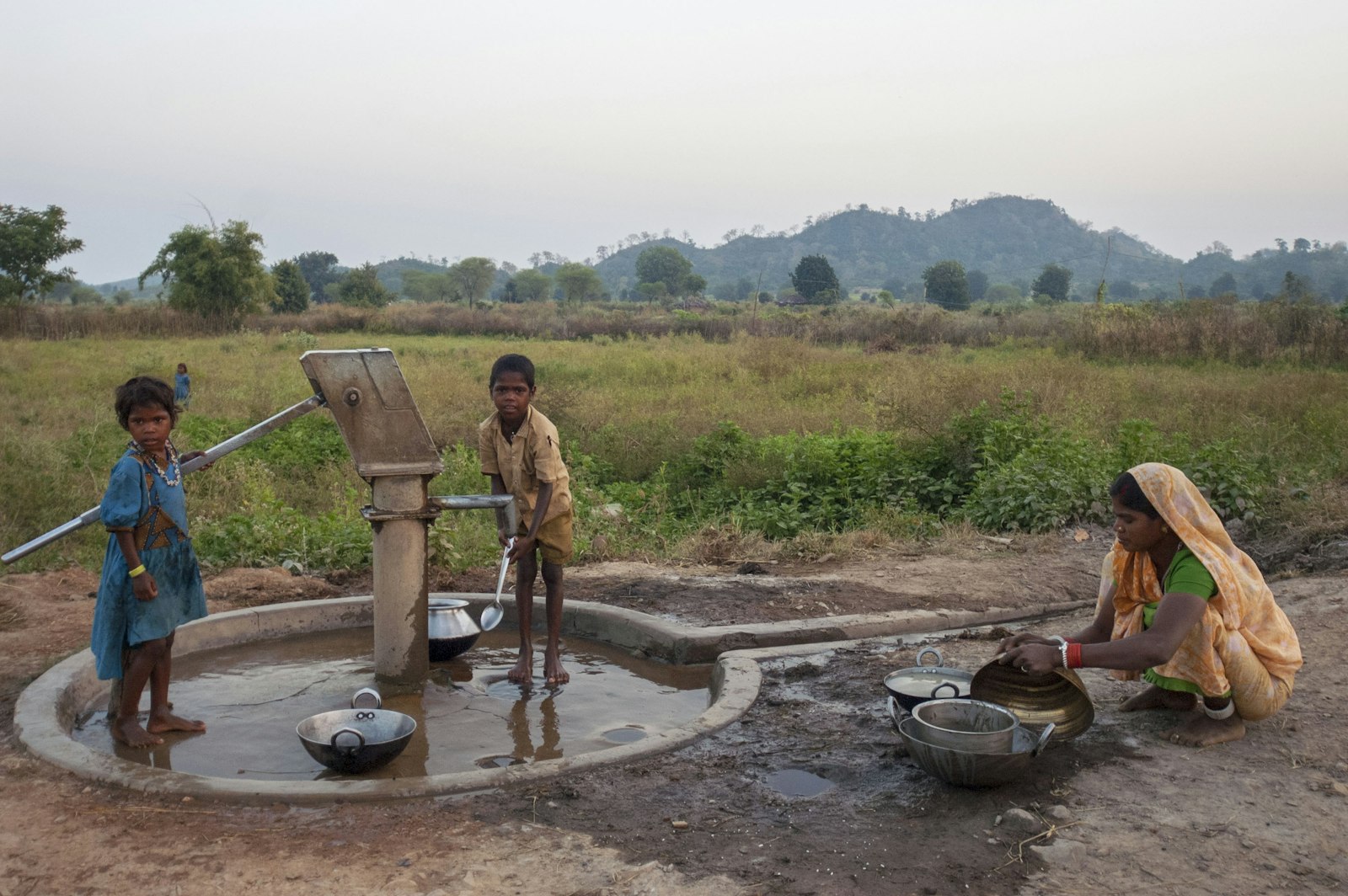
The everyday reality in many unserved villages across India — untreated handpump water, used for drinking as well as washing.
How we’re approaching it right now
- Gurugram-first, going forward
- Our earlier installations span Haryana. For at least the next year we’re concentrating new work on Gurugram and nearby villages, to bring focus and deliver quality rather than spreading thin.
- Government schools & underserved villages
- We prioritise communities drinking untreated tap, direct-supply, or underground water linked to water-borne illness.
- Asset-light, collaboration first
- Where possible, we grow through partnership — OEMs and companies contributing through their own CSR programmes — rather than heavy capital investment as our default.
- Co-ownership, not a handover
- Every initiative defines local co-ownership and a monitoring mechanism up front — the beneficiary community shares responsibility, not just the benefit.
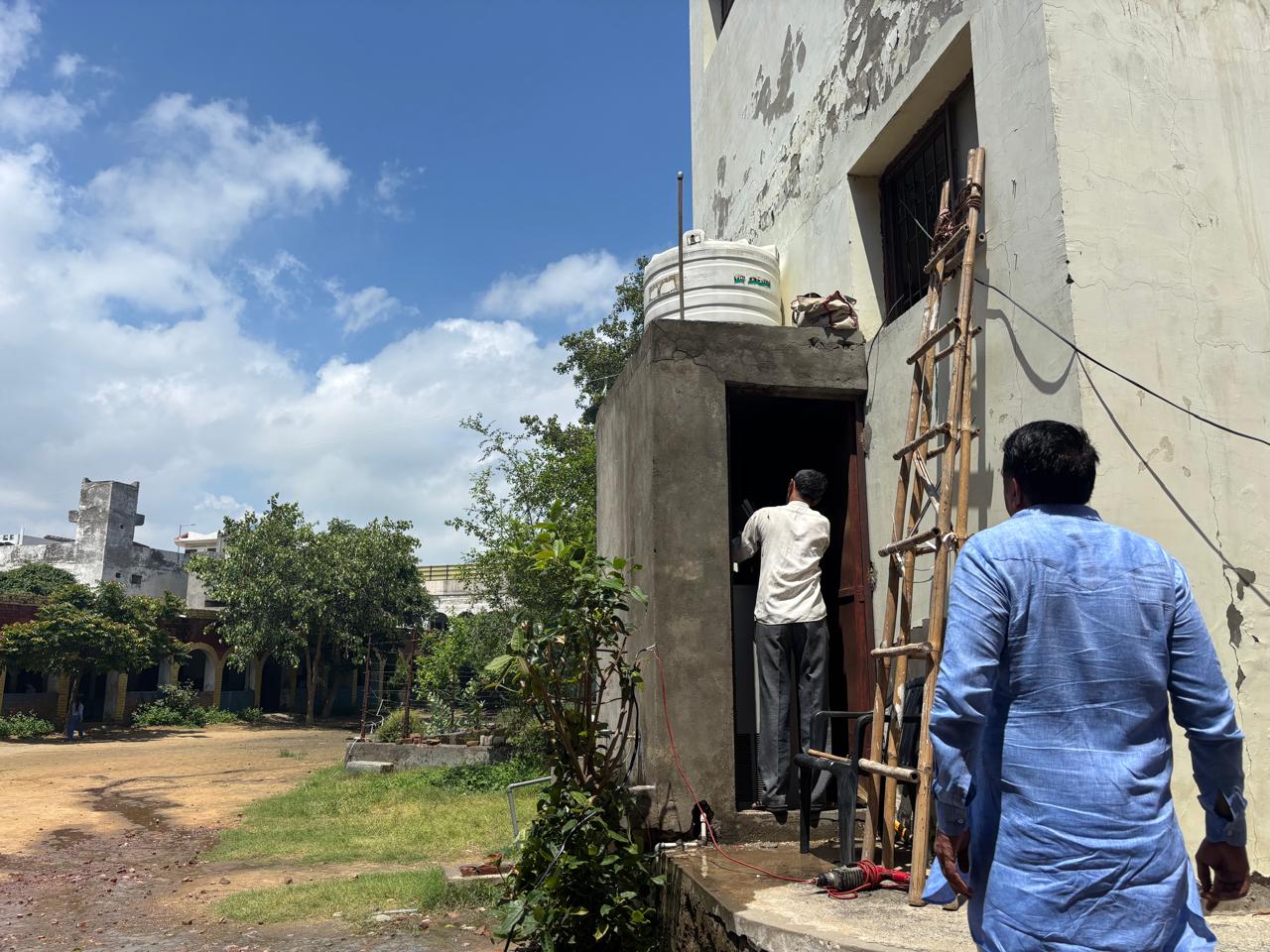
A site visit in progress — assessing space, water source, and access before any installation is planned.
What we’ve delivered so far
This isn’t a plan on paper. Seven RO systems are already installed and running across six sites in Haryana — in government schools, a temple, and residential areas open to the public.
sites with clean-water systems installed and running
RO units commissioned to date
the standard every installed system is tested against
| Site | Location | Type | RO units |
|---|---|---|---|
| GMSPS Harchandpur | Sohna | School | 1 |
| Harchandpur — public access point | Sohna | Public | 1 |
| GGSSS, Hisar Road | Rohtak | School | 1 |
| Hathira Devi Temple | Kurukshetra | Public | 2 |
| Vipul World | Gurugram | Public | 1 |
| Mata Dhanpati Devi Charitable Trust | Rohtak | Trust | 1 |
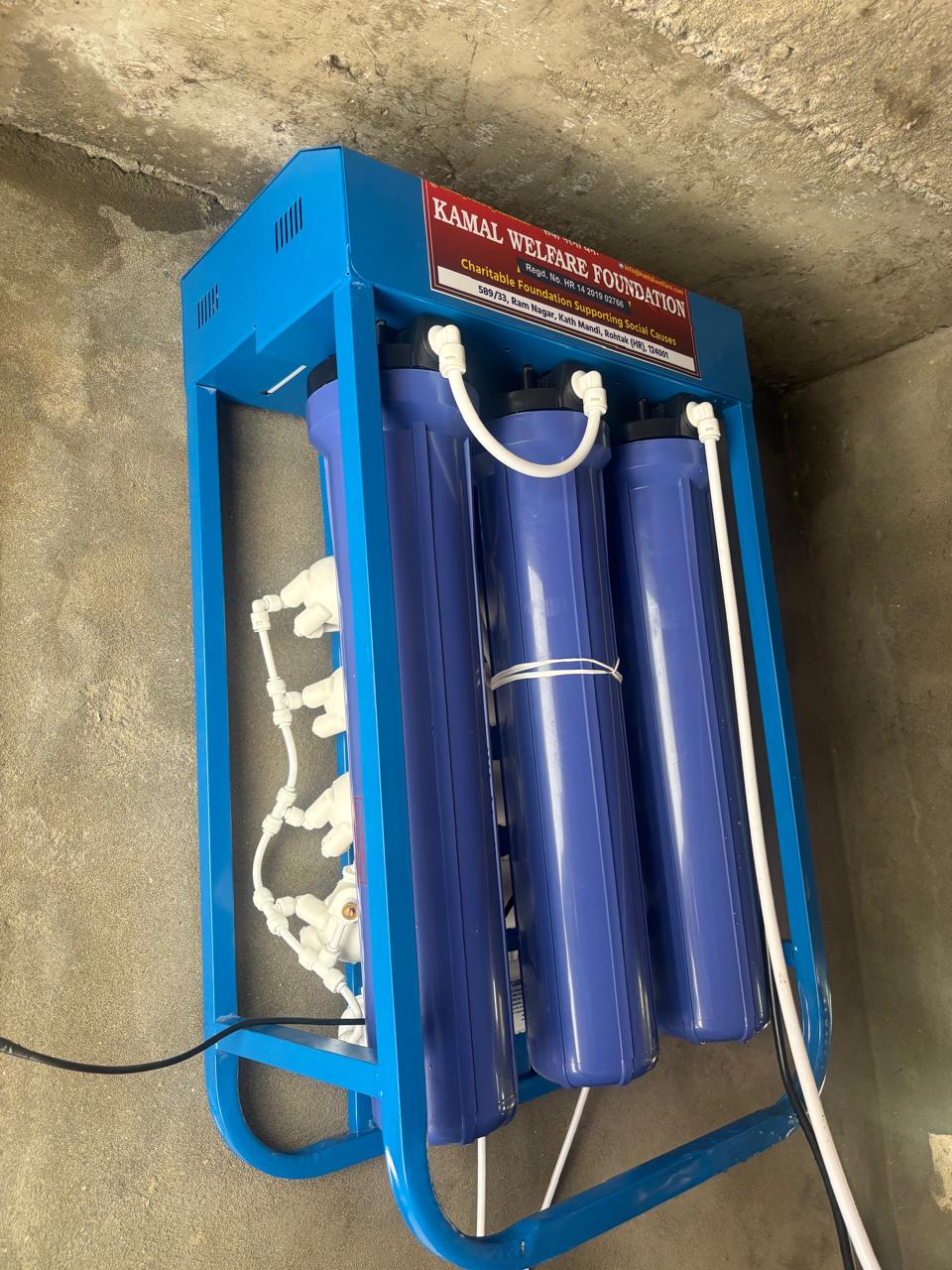
We test the water before we size anything
RO capacity and the number of pre-treatment stages depend on the actual source water at each site — not a generic assumption. Sizing a plant before testing the water is how installations end up wrong, so testing always comes first.
Before installation: baseline testing
Every site is tested for six parameters before we decide on plant capacity or pre-treatment stages:
After installation: certification & re-testing
Every plant gets a water-quality test certificate from an accredited lab before it’s handed over for use, and is re-tested quarterly against IS 10500:2012 parameters thereafter — so quality is verified on an ongoing basis, not assumed after day one.
The fuller technical roadmap
Alongside the installations already running across Gurugram and nearby villages, we’ve developed a detailed feasibility plan for larger commercial RO installations across nine rural schools — including seven GLA University–supported villages in the Vrindavan/Mathura cluster. This is our reference plan for scaling further, not the immediate ask.
Download the full technical white paper (.docx)Gurugram & nearby villages
Haryana · rural periphery · active focus
RO units already installed
Vrindavan / Mathura
Uttar Pradesh · GLA University–supported · roadmap
schools in the longer-term plan
The technical configuration
When we do install a plant, it’s a skid-mounted, multi-stage commercial system sized to the school’s actual enrolment — not a domestic under-the-sink unit.
- Pre-filtration
- Sediment filter followed by activated carbon, removing turbidity, silt, and chlorine/organic taste-and-odour issues.
- RO membrane stage
- Thin-film composite membranes sized for 250–500 LPH depending on enrolment, finalised after a site water and demand assessment.
- Post-treatment
- UV sterilisation against microbial contamination, plus a re-mineralisation stage — pure RO permeate strips out minerals that matter for growing children.
- Storage & power
- A 500–1,000L food-grade tank plumbed to multiple dispensing points, plus a voltage stabiliser given rural power variability.
Output water is tested against IS 10500:2012, the Bureau of Indian Standards specification for drinking water, with a certificate before handover and quarterly re-testing thereafter.
Roadmap budget, if fully scaled
This is the costed 3-year plan from our technical feasibility study, covering all nine schools should we scale beyond the current phase across Gurugram and nearby villages. Year 1 of the phased plan fits within a ₹5–15L investment band.
| Phase | CapEx | OpEx & Staffing | Year Total |
|---|---|---|---|
| Year 1 — Pilot & initial rollout (6 schools) | ₹7,80,000 | ₹4,26,450 | ₹12,06,450 |
| Year 2 — Scale-up (remaining 3 schools) | ₹3,90,000 | ₹5,08,800 | ₹8,98,800 |
| Year 3 — Consolidation & sustainability | ₹18,000 | ₹5,37,450 | ₹5,55,450 |
total 3-year CapEx across all nine schools, at full scale
total 3-year operations, staffing & monitoring
the drinking-water standard every plant is tested against
How we monitor what we build
Whatever the scale, the same discipline applies: no single failure — a missed vendor visit, a busy coordinator, a disengaged teacher — should go unnoticed for long.
| Report | Frequency | Key Contents |
|---|---|---|
| Monthly Progress Report | Monthly | Plant status, issues, photographs, spend to date |
| Quarterly Water Quality Report | Quarterly | IS 10500 results per school, pass/fail, corrective action |
| Quarterly Financial Statement | Quarterly | CapEx vs. budget, O&M spend, variance notes |
| Bi-annual Stakeholder Review | Twice yearly | Programme summary, risks, plan for next 6 months |
| Annual Impact Report | Annually | Children served, uptime % per plant, cost per child |
Help fund the next initiative across Gurugram and nearby villages.
Every contribution maps to a specific initiative — a plant, a test, or the coordination that keeps it running.